Metronome and Tuner Reviews
/I've purchased a number of different metronomes and tuners over the past few years in search of the best value for the money. If I wanted as many options in a metronome as possible, I'd get a Dr. Beat DB-90. If I wanted to go cheap, I would (and have) just downloaded some apps for my iPod Touch. Still, I want a device I can leave in the band room and not worry about it disappearing or getting dropped. Ideally, it's flexible (both a metronome and a tuner), inexpensive, and easy enough for any student to grasp how to use it without a whole lot of instruction. Today I'll summarize my findings with four different devices.

Planet Waves PW-MT-01
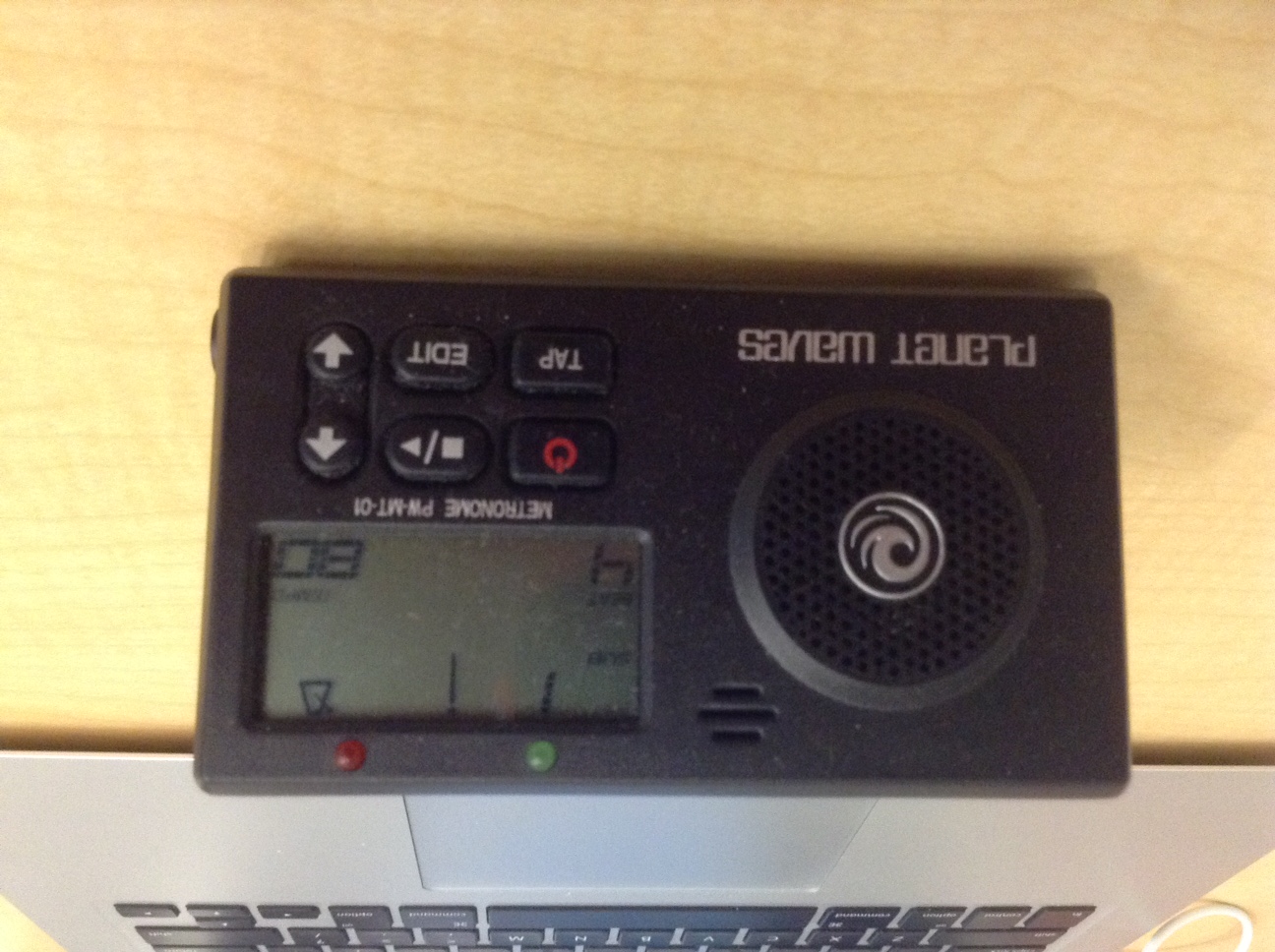
(metronome only! There is, however a version that integrates a tuner, but don't ask me how it works since it seems to show exactly the same buttons and case as the metronome only)

The thing that stands out about this metronome is that the first two beats it gives when started are somewhat rushed. Following the initial stutter, it seems to keep time adequately, but it is particularly jarring at a faster tempo. The sound (wood blockish) is fine. Having the tempo tap feature on a dedicated button is great, but the other controls are cumbersome (editing beats per measure, the subdivision, or changing tempo one beat at a time). There are better choices (such as the Korg TM-50) for around the same price.

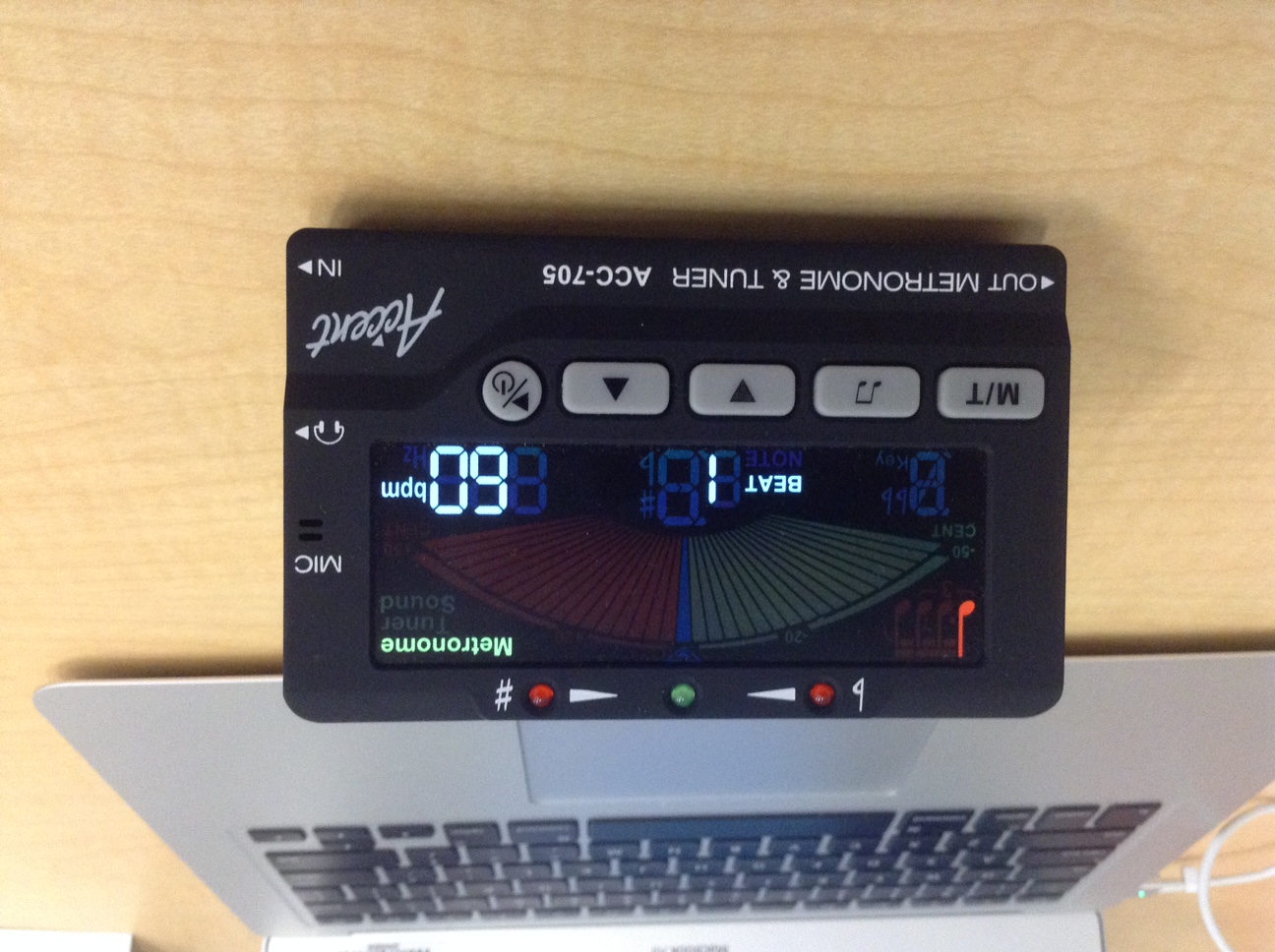
The display on this combination metronome/tuner is adequate when viewed from the right angle. It is annoying that simply turning it on/off requires a slightly more than 2-second push (and moving between the tuner and metronome requires the same push on a different button). More annoying is that the metronome does not start right away after pushing "Play" (it's about .9s of delay). Nice is the placement of Italian tempo markings on the front. As you increase or decrease the tempo, a marker shows which range you are in. A variety of beat divisions are possible, including eighth notes, eighth note triplets, sixteenths, offbeat eighth notes, and the dotted-eighth plus sixteenth note rhythm.
The tuner is a little less "jumpy" than the other two in this review--perhaps it is just my perception. In any case, I don't mind it. Since I'm used to it, I prefer seeing tuning horizontally--but the Cherub's vertical arrangement (sharp=high and flat=low) makes more sense from the way we talk about pitch. One other feature is the ability to change the key on the tuner. Possibilities are the common band transpositions of Bb, Eb, and F, in addition to C for concert pitch. While this is likely helpful to some students, I think it is equally likely to be confusing without an explanation.

The Accent tuner/metronome may be a bit harder to find since Accent instruments are sold only through certain dealers. This model is a vast improvement on the ACC-405. I owned a couple of those which worked fine for a while but exhibited some strange behaviors before they stopped working. The color display on this new model looks fine, provided you view it head on. Any other angle makes it difficult if not impossible to read. The on/off and mode switch buttons require a hold of less than one second to activate, and those buttons also have a secondary function for a simple press. The metronome thankfully starts beeping right away. Beat groupings from 0 to 9 can be cycled with one button, and the tempo adjustment buttons move 1 bpm up or down (faster if held). The range of beat divisions is the same as the Cherub with the addition of a couple eighth/sixteenth note combos.
The tuner, like the Cherub, has a transposition option. It also has an 1/8" output and a 1/4" pass-through for keeping the tuner plugged in while also going through an amp. Last, it seems a little strange that the speaker is on the back. While it is still loud enough, there is a noticeably lower volume because of this placement. It also makes the sound a little pingier when placed directly against a music stand.

Korg TM-50
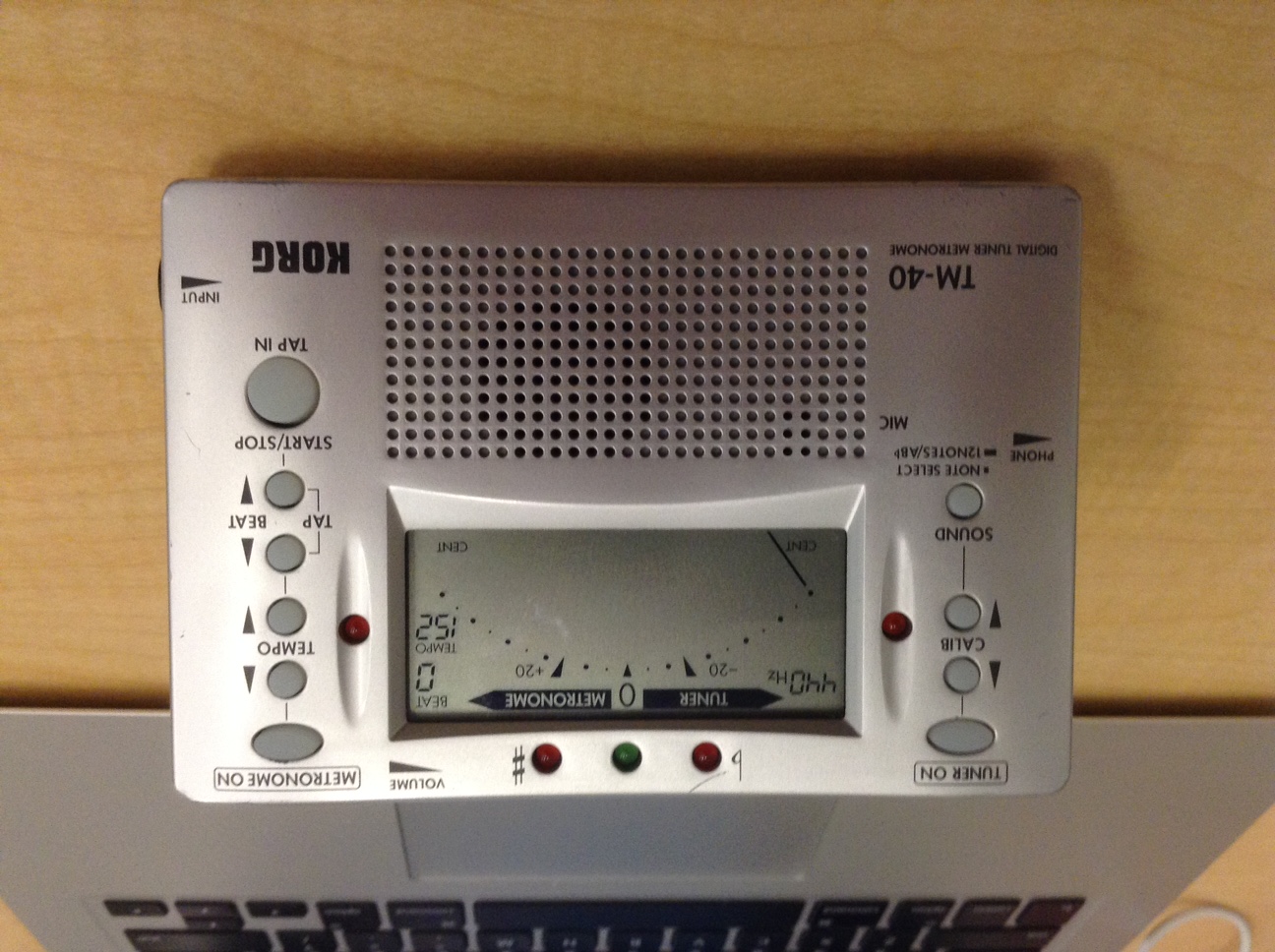
The picture from the start of this article is actually a TM-40. My TM-50 disappeared a few weeks ago and I have yet to order a replacement. The key features are the same, but the TM-50 tweaks some things that make it even better than the TM-40.
While this Korg tuner/metronome combo is a little more expensive ($30 currently), it is the best value I have found for what I am looking for. Metronome and Tuner functions have dedicated buttons are are easy to use, there is a tempo tap feature from a dedicated button, and you can set the rate of change to one at a time or skips (makes getting to a vastly different tempo much faster). The display is adequate and has a backlight which I never use. There is still some room for improvement--I wish the start/stop button for the metronome was larger. I'm prone to touch the tempo tap button instead.
The metronome has several beat division options: eighths, triplets, triplets without the center note, sixteenths, sixteenths without the two center notes. You can also set beat groupings of 0 to 9.
While it is more expensive than the others I reviewed, the Korg TM-50 is my favorite all-in-one practice tool for the band room. If it gets busted, it's not an arm and a leg to replace, and students are able to use the important functions on their own. The tempo tap also makes it useful to me as a conductor when I want an easy to access reference point.
Do you have other suggestions? I'm also looking for something better, so let me know if you'd like me to take a look at something else.